






1031 Exchange Explained: How Real Estate Investors Defer Taxes and Build Wealth
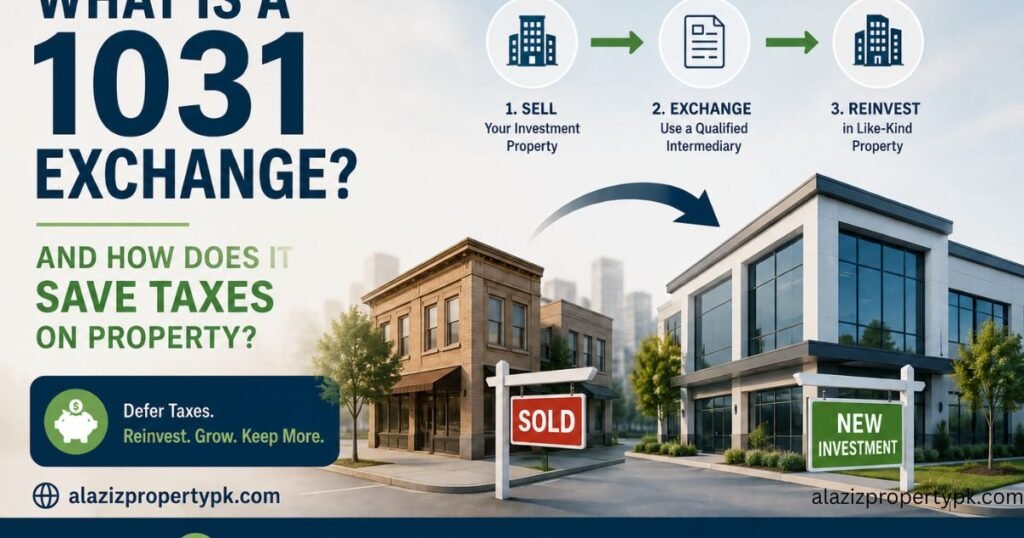
What is a 1031 Exchange and How Does It Save Taxes on Property? 2026 Guide
My uncle came to the United States in 1998 with very little. He worked two jobs for years, saved carefully, and eventually bought a small rental property in New Jersey for $180,000. Fifteen years later, that same property was worth $420,000. When he finally decided to sell, his accountant handed him a number that made his stomach drop .nearly $36,000 owed in capital gains tax.
He called me that evening frustrated. “I worked for this money twice,” he said. “Once to earn it, and now I’m being taxed on money I haven’t even touched yet.”
His accountant had failed to mention one thing. something that could have saved him most of that tax bill entirely. It is called a 1031 Exchange. And the story of how it works, who it is for, and why so many Pakistani investors in America never hear about it until it is too late. that is exactly what this article is about.
The Tax Problem Nobody Warns You About
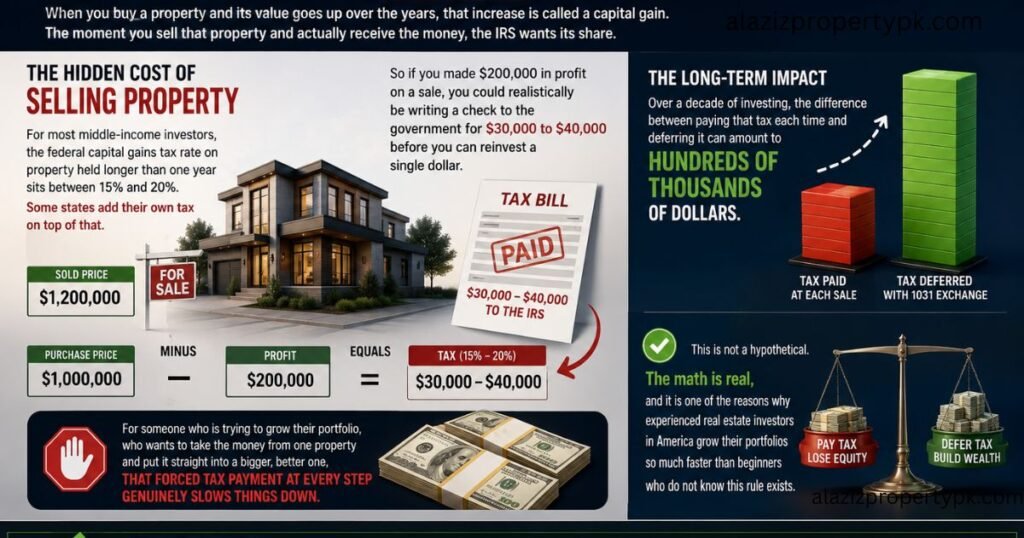
When you buy a property and its value goes up over the years, that increase is called a capital gain. The moment you sell that property and actually receive the money, the IRS wants its share.
How much? For most middle-income investors, the federal capital gains tax rate on property held longer than one year sits between 15 and 20 percent. Some states add their own tax on top of that. So if you made $200,000 in profit on a sale, you could realistically be writing a check to the government for $30,000 to $40,000 before you can reinvest a single dollar.
For someone who is trying to grow their portfolio. who wants to take the money from one property and put it straight into a bigger, better one. that forced tax payment at every step genuinely slows things down. Over a decade of investing, the difference between paying that tax each time and deferring it can amount to hundreds of thousands of dollars.
This is not a hypothetical. The math is real, and it is one of the reasons why experienced real estate investors in America grow their portfolios so much faster than beginners who do not know this rule exists.
So What Exactly is a 1031 Exchange?.
The name comes from Section 1031 of the US Internal Revenue Code. The rule itself is not new. it has been part of American tax law since 1921. But surprisingly few people outside professional investing circles understand how it actually works.
Here is the short version: if you sell an investment property and use all of the proceeds to buy another investment property of equal or greater value, the IRS allows you to postpone paying capital gains tax. You are not avoiding the tax permanently. you are pushing it forward. But as long as you keep reinvesting into new properties, that tax keeps getting pushed forward. And there is no legal limit to how many times you can do this. that alazizpropertypk.com try to explain you.
The idea behind the rule is actually logical. Congress created it because they recognized that if investors are simply moving their money from one property to another .not cashing out and spending the gains’ forcing them to pay tax at each step discourages investment and slows economic growth. So they built in a mechanism to let investors keep their capital fully working.
How It Actually Works. A Real Scenario
Let me give you a concrete picture because the mechanics matter here.
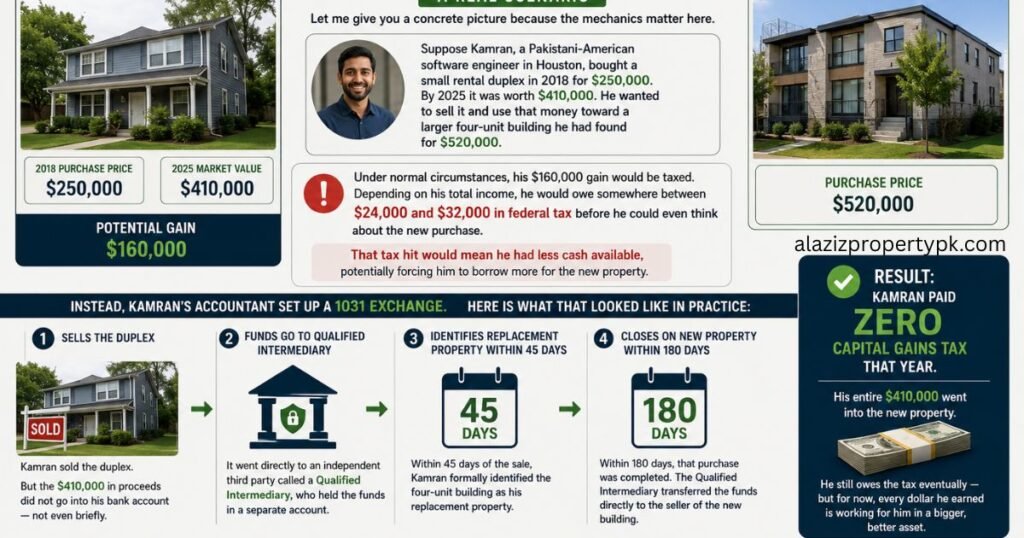
Suppose Kamran, a Pakistani-American software engineer in Houston, bought a small rental duplex in 2018 for $250,000. By 2025 it was worth $410,000. He wanted to sell it and use that money toward a larger four-unit building he had found for $520,000.
Under normal circumstances, his $160,000 gain would be taxed. Depending on his total income, he would owe somewhere between $24,000 and $32,000 in federal tax before he could even think about the new purchase. That tax hit would mean he had less cash available, potentially forcing him to borrow more for the new property.
Instead, Kamran’s accountant set up a 1031 Exchange. Here is what that looked like in practice:
Kamran sold the duplex. But the $410,000 in proceeds did not go into his bank account .not even briefly. It went directly to an independent third party called a Qualified Intermediary, who held the funds in a separate account.
Within 45 days of the sale, Kamran formally identified the four-unit building as his replacement property. Within 180 days, that purchase was completed. The Qualified Intermediary transferred the funds directly to the seller of the new building.
Result: Kamran paid zero capital gains tax that year. His entire $410,000 went into the new property. He still owes the tax eventually — but for now, every dollar he earned is working for him in a bigger, better asset.
The Rules You Must Follow . And They Are Strict
The IRS does not hand out this benefit casually. There are specific conditions that must be met, and if any one of them is missed, the entire tax deferral disappears.
Both properties must be held for investment or business purposes.
Your personal home does not qualify. A vacation property you use yourself most of the year does not qualify. The property must genuinely be used as a rental or for business. If you have been living in your property part-time and renting it part-time, speak to a CPA before assuming you qualify.
The replacement property must be “like-kind.” This sounds more restrictive than it actually is. In practice, almost any US real estate held for investment qualifies as like-kind to any other. You can exchange a rental house for a commercial building. You can exchange raw land for an apartment complex. What you cannot do is exchange US real estate for property outside the United States. so swapping an American property for something in Pakistan does not qualify.
You have 45 days to identify your replacement property.
This clock starts ticking the moment your old property closes. Within those 45 days you must submit a written list of potential replacement properties to your Qualified Intermediary. You can list up to three properties. If day 46 arrives and you have not done this, the exchange is over and the full tax applies. There are no exceptions, no extensions, no special circumstances that change this.
You have 180 days to close on the new property.
From the same starting date . the day your old property closed. you have 180 days total to complete the purchase of your replacement property. Not to sign a contract. Not to be in escrow. To fully close. Miss this by a single day and the tax deferral is gone.
The Qualified Intermediary . Why This Person Is Everything
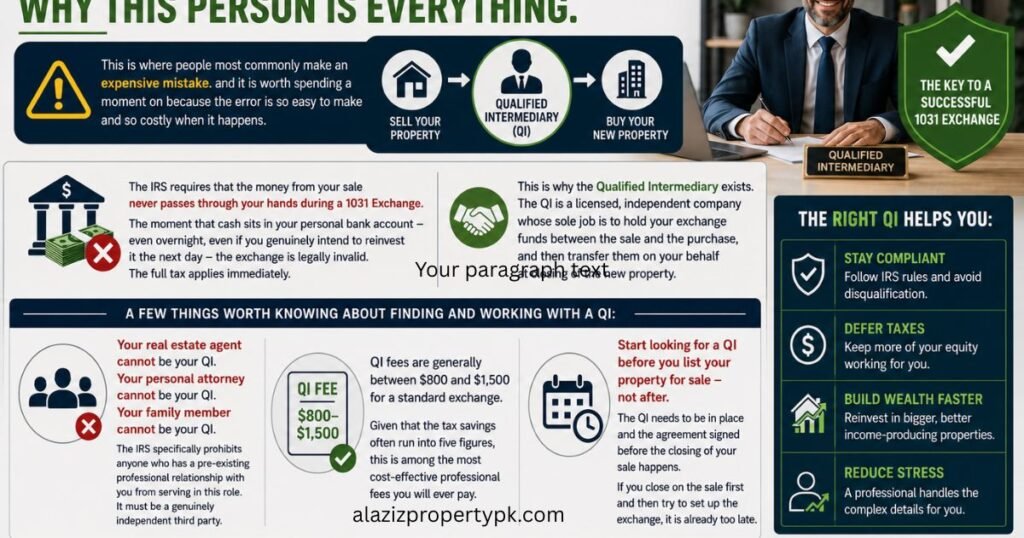
This is where people most commonly make an expensive mistake .and it is worth spending a moment on because the error is so easy to make and so costly when it happens.
The IRS requires that the money from your sale never passes through your hands during a 1031 Exchange. The moment that cash sits in your personal bank account . even overnight, even if you genuinely intend to reinvest it the next day . the exchange is legally invalid. The full tax applies immediately.
This is why the Qualified Intermediary exists. The QI is a licensed, independent company whose sole job is to hold your exchange funds between the sale and the purchase, and then transfer them on your behalf at closing of the new property.
A few things worth knowing about finding and working with a QI:
Your real estate agent cannot be your QI. Your personal attorney cannot be your QI. Your family member cannot be your QI. The IRS specifically prohibits anyone who has a pre-existing professional relationship with you from serving in this role. It must be a genuinely independent third party.
QI fees are generally between $800 and $1,500 for a standard exchange. Given that the tax savings often run into five figures, this is among the most cost-effective professional fees you will ever pay.
Start looking for a QI before you list your property for sale .not after. The QI needs to be in place and the agreement signed before the closing of your sale happens. If you close on the sale first and then try to set up the exchange, it is already too late.
What Happens When You Eventually Stop Exchanging?
The day will come .for most investors .when they decide to sell a property without doing another exchange. Maybe they are retiring. Maybe they want the cash. Maybe their situation has changed.
At that point, the deferred tax from every previous exchange becomes due. The IRS calculates the gain all the way back to the original purchase price of the very first property. This can be a substantial number after years of exchanges and appreciation.
There are two things worth knowing here. First, some investors plan their estate around this specifically .if the property is passed to heirs upon death, the heirs receive what is called a “stepped-up basis,” which means the cost basis is reset to the current market value at the time of inheritance. In many cases this eliminates the deferred tax entirely. This is a significant wealth transfer strategy for families thinking long-term.
Second, even if you eventually do pay the tax, you will have had decades of your full capital working for you rather than a reduced amount after tax payments. The math almost always favors deferring even if you know you will eventually pay.
For Pakistani Investors Specifically
There is a particular pattern I have noticed among Pakistani-Americans who own investment property in the United States. They tend to be careful, diligent investors who research their purchases thoroughly. But because most of their real estate knowledge comes from community conversations rather than formal professional advice, information about tools like the 1031 Exchange often does not reach them until much later than it should.
I have spoken with people who sold properties and paid tens of thousands in unnecessary tax simply because nobody in their circle had mentioned this option. That is a painful thing to watch . not because the money is gone, but because it was avoidable.
If you own a rental property in the US right now and you are thinking about selling in the next few years, have this conversation with a CPA who specializes in real estate taxation before you list the property. Not after. Before. The planning has to happen in advance because the QI arrangement must be in place before your sale closes.
Also worth noting: foreign nationals .including Pakistani citizens living in the US on H-1B, L-1, or O-1 visas. can fully use the 1031 Exchange. Non-residents who own US investment property can also use it, though they face additional FIRPTA withholding requirements that require extra planning. The exchange itself is not restricted by citizenship or visa status.
Questions That Come Up Most Often
Can I use the money briefly for something else before buying the new property?
No. Any use of the funds outside of the exchange .even temporarily . invalidates the whole thing. The Qualified Intermediary holds the money specifically to prevent this from happening accidentally.
What if I cannot find a good replacement property in time?
This is the most common practical challenge with the 45-day deadline. The way experienced investors handle it is by having their next target already researched before they even list the old property. Some identify backup options as well, since you are allowed to name up to three candidates. Rushing a property purchase because you are running out of time on a 1031 deadline is a recipe for a bad investment.
Can I exchange into multiple properties?
Yes. You are not limited to one replacement property. You can sell one property and exchange into two or three different ones, as long as the total value of the replacements meets the required thresholds.
Does the exchange work for commercial properties?
Yes. The 1031 Exchange applies to commercial real estate, land, industrial property, and multifamily residential. Essentially any real property held for investment or business use in the United States qualifies.
What if the new property costs less than what I sold the old one for?
The amount of the difference .called “boot” . becomes taxable. So if you sold for $400,000 and only bought a replacement for $350,000, that $50,000 difference is treated as a taxable gain. To defer the full tax, the replacement must be of equal or greater value.
The Bottom Line
The 1031 Exchange is not a loophole. It is not aggressive tax planning. It is a straightforward provision that Congress built into the tax code specifically to encourage investment and allow capital to keep moving productively through the economy.
What it requires from you is awareness, timing, and a small amount of professional support. The awareness is what you now have from reading this. The timing means planning your exchanges in advance rather than reacting after a sale. The professional support means finding a good CPA and a reputable Qualified Intermediary before you need them.
For Pakistani investors managing property in the United States .whether you have one rental property or several .this is the single most valuable tax strategy available to you. Use it.

Alazizpropertpk.com is a modern real estate and cryptocurrency-focused platform dedicated to providing secure, innovative, and reliable investment opportunities. We specialize in property buying, selling, investment consultancy, and crypto-integrated real estate solutions. Our goal is to bridge the gap between traditional real estate and the digital financial world by offering transparent services, expert guidance, and smart investment strategies for local and overseas clients. With a commitment to trust, innovation, and customer satisfaction, Al Aziz Property PK is helping shape the future of real estate in World.